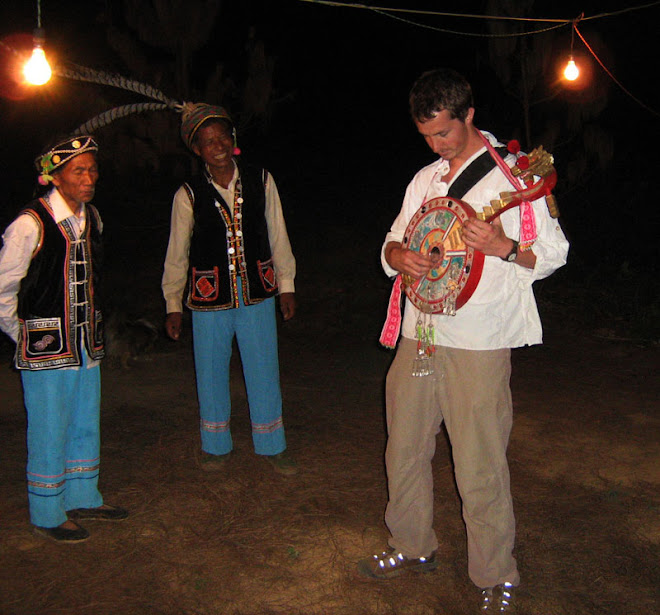
Well it's about that time again, sending those interested readers another update on my China experiences. It's hard to know where to start considering everday is a new adventure filled with bizarre sites and odd encounters. China is a strange an intriguing country and as Dr. Detrano has put it, "A place of contrast and contradiction". A land which is becoming increasingly more important on a global scale, where thousands of years of culture and tradition akwardly and amusingly try to coexist and integrate into a new generation being created by the fastest growing economy in the world. A place where communism and capitalism walk hand in hand. Where urbanization is an interminable process and rural living is and will eventually become depleted. As a couple foreigners who have been living in China have told me, "You can't find a more interesting place in the world to be visiting, especially with the upcoming olympics, which direction the country goes in the next decade or so is really anyone's guess". I encourage anyone with the opportunity to travel to come check out China, you will not be disappointed.
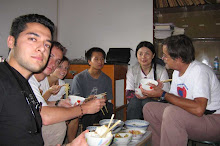
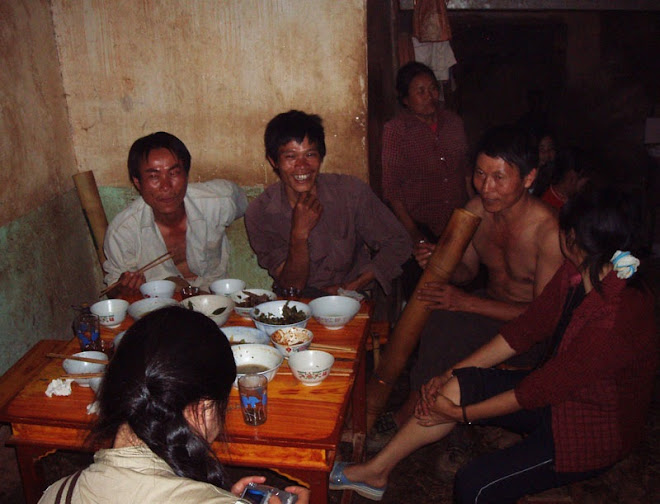
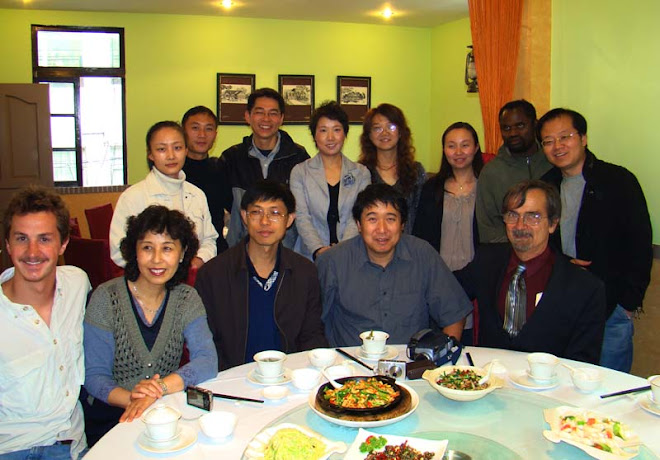
So, for the past 5 days or so I've been in Kunming. I went byyyee-cycling with Bob, checked out dragon gate temple in the West Mountains with Shao Li, and celebrated one of Shao Li's friends birthday by eating pig leg for dinner and drinking beers at a karaoke bar. Dragon gate temple was beautiful, the bicycling was death-defying, the pig leg was delicious, and the karaoke singing was humiliating. Maybe it's the way the Chinese language sounds but everyone who sang karaoke had fantastic voices and nailed every song with perfect precision, I on the other hand completely accosted everyones eardrums with terrible renditions of Michael Jackson's "Beat It" and the theme song to ghostbusters. Adorably however, the chinese will never let you think that you butchered the song by always adding a thunderous applause at the end. Unlike many of my friends, they never have something criticizing to say, probably because they don't know how to say it, but regardless, I'm considering making a trade. Dr. Detrano left on Saturday to go conduct some business in a nearby city, so for the past couple days I've been hanging out with Shan Shan and Shao Li. Because neither of them speak english very well, especially Shao Li, you can only imagine the communication problems we've encountered and assume that we have not been engaging in the most interesting of conversations. There is not much talk of politics, religious beliefs, or even an account of an amusing anecdote. With Shao Li, we have accomplished the impossible if were even able to successfully exchange a proper greeting. Needless to say, this is not exactly the type of person you want parading you around the city and acting as your translator. For a while, due to the language barrier, we actually had a very funny misunderstanding for a while. For our entire stay in Yi Che, Shao Li and I were roomates. Through out the entire trip we were helping each other learn our respective languages. I'd point to an object in the room and say it an english, then he would tell me in Chinese. One day we were sitting in our hotel room and I pointed to the bathroom, which happened to be next to the door that left our room, and said "bathroom". Because he had trouble with the pronunciation of the words Shao Li was also writing down, in chinese characters, the correct pronunciation on a sheet of paper (kind of like pinyin for english speakers trying to learn chinese). Well for the next couple of days Shao Li kept asking me if I wanted to use the bathroom. He would either say, "do you want to go to the bathroom?" (not even that well though), or he would simply ask me in an inquisitive manner, "bathroom?". I found this very strange. I thought to myself, does he want me to go to the bathroom with him? is he being polite and asking if i want to use the bathroom before he does? or is he treating me like I'm 5 and making sure that I use the bathroom before we go out somewhere? I really had no idea. It wasn't until much later, when Bob, Shan Shan, Shao Li, and myself were all hanging out that the truth was discovered. Bob and Shan Shan were hysterically laughing as Shao Li was showing them his piece of paper with character written versions of english pronunciation. They found one in particular very funny. The day I was teaching Shao Li how to say bathroom, he had misunderstood and thought I was pointing to the door, implying that "bathroom" was synonymous with "leaving the room" or "going out". So on a number of occasions Shao Li would want to go eat and would say, "Jason, bathroom?" at which I would always reply, "Uh, no thank you Shao Li, I don't have to use the bathroom" at which he would usually just shrug his shoulders and leave the room. I'm happy to report that I'm no longer asked to use the bathroom with Shao Li and that we're able to successfully eat dinner together. This is only one of many experiences that I've had like that.
I'm actually going to have to leave this update a little shorter than the previous one because Bob is just getting back from his trip and probably wants to use his computer. We will be leaving tomorrow morning for another rural excursion to continue our research. I can't remember the name of the township but its about 4 hours south of Kunming and will be comparable to what our conditions were like in Yi Che and its surrounding villages. We'll make sure to snap some good photos and I'll post a message as soon as I get the chance. I hope everyone is doing well and I'll try to write soon.
-Jason
Tuesday, April 15, 2008


Tuesday, April 8, 2008
April 8,2008 Back in Kunming
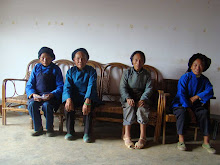
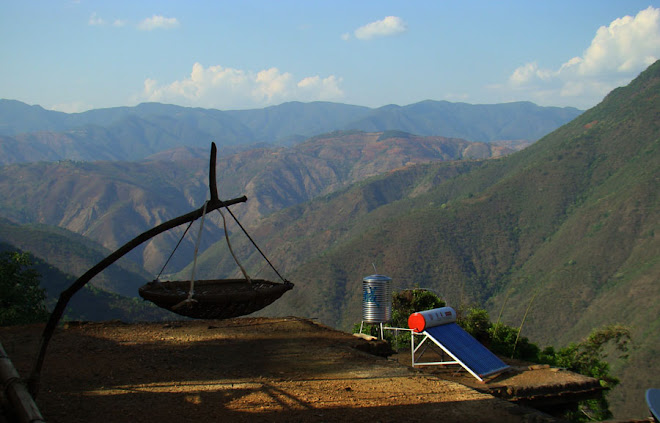
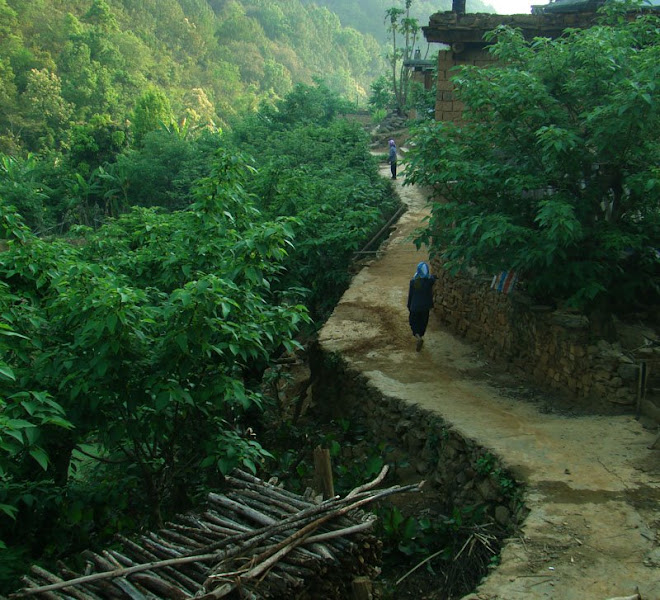
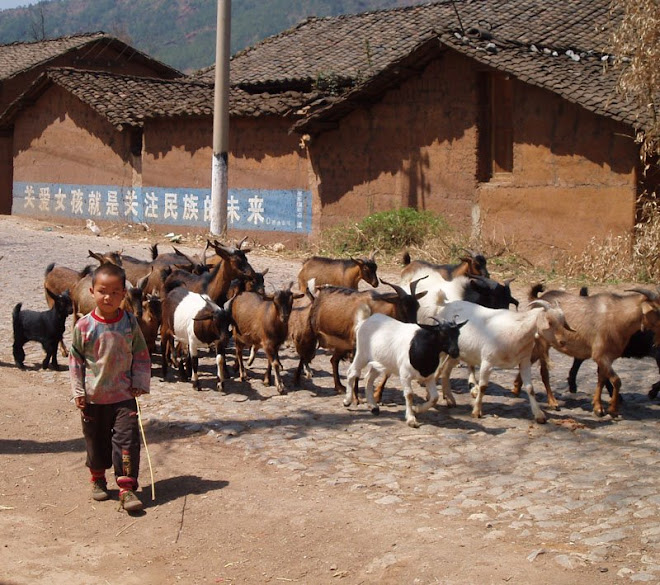
Well after about ten days in the Bush, I'm back in Kunming where I can conveniently control the temperature of my shower and not have to squat when taking a.....Needless to say my experiences in Yi Che and the surrounding villages that we traveled to gave me a unique insight and glimpse into the China that is not popularly traveled to by tourists. While the township of Yi Che still resembles somewhat of a modernized city, the distant villages or what we like to consider as third world. Poor plumbing (if any), little electricity and local villagers who look like they've never seen a toothbrush, a bar of soap, or any utensil for hygenic purposes (which very likely they have not).
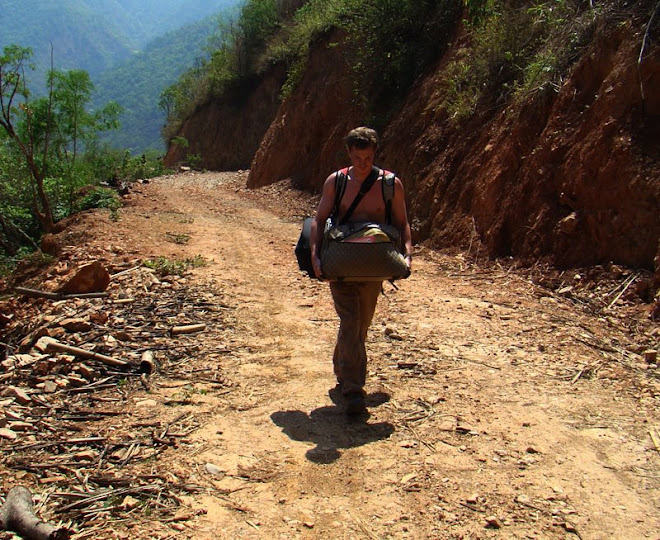
One village in particular, Shi Ban, was about fourteen miles from Yi Che but took more than two hours to reach by car. We traveled there on three separate occasions which added up to about 12 hours of the most harrowing and treacherous driving I've ever experienced. The road was bumpy, narrow, and winding and a minor mistake could have caused the car to plummet a looong way down. On one occasion we were taken about half way and then expected to walk, but by chance we caught up with a car that happened to be traveling near our location. The car however was a small truck (small in China is on a whole different scale) and myself, Shao Li, and a doctor from the Yi Che hospital were crammed in the bed for an uncomfortable hour and a half long drive.
Because we had no source of transportation from Shi Ban back to Yi Che, we walked about 7 miles back until we were finally picked up. It would be an understatement to say that I was more than happy to see Shi Ban go. The other village that we traveled to was much more easily accessible and involved maybe a 15 minute drive up a cobblestone road from Yi Che. We ran research and free clinics from this location but mainly focused on research.
One village in particular, Shi Ban, was about fourteen miles from Yi Che but took more than two hours to reach by car. We traveled there on three separate occasions which added up to about 12 hours of the most harrowing and treacherous driving I've ever experienced. The road was bumpy, narrow, and winding and a minor mistake could have caused the car to plummet a looong way down. On one occasion we were taken about half way and then expected to walk, but by chance we caught up with a car that happened to be traveling near our location. The car however was a small truck (small in China is on a whole different scale) and myself, Shao Li, and a doctor from the Yi Che hospital were crammed in the bed for an uncomfortable hour and a half long drive.
Because we had no source of transportation from Shi Ban back to Yi Che, we walked about 7 miles back until we were finally picked up. It would be an understatement to say that I was more than happy to see Shi Ban go. The other village that we traveled to was much more easily accessible and involved maybe a 15 minute drive up a cobblestone road from Yi Che. We ran research and free clinics from this location but mainly focused on research.
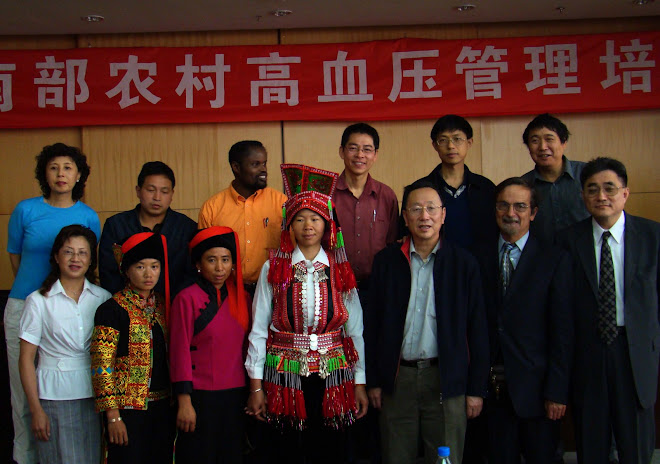
For those of you who are unfamiliar with exactly what we're doing, let me give you a quick overview. Dr. Detrano is the president of an organization that he started called the China-California Heart Watch. He's currently conducting research in the Yunnan Province (poorest province in China) to study the effects of High Blood Pressure in rural villages and townships. Because of the lack of knowledge about hypertension and subsequently the inaccessibility of proper care, Dr. Detrano believes that incidences of cardiovascular disease (CVD) will increase tremendously over the course of the next 30 to 40 years. Currently 70% of the Chinese population live in rural faming communities, however, by 2040 it has been estimated that this number will decrease to about 30% as the population becomes more urbanized due to job opportunities that become available only by living in the city. The unhealthy lifestyle that is naturally adopted through city living will only add to the already frighteningly high predicted rates of heart disease. Through research and education, Dr. Detrano helps to raise awareness and potentially prevent what could possibly become an epidemic of CVD in China.
The research involves us traveling to remote and impoverished locations located around the Yunnan Province. Prior to running the research, we randomly select 30 to 40 people born between the years of 1939-1958. Bob has found that anyone younger than this usually is not living in their home village, rather, has left to earn money for his family in a more profitable location such as a city. I haven't found out why he doesn't take research subjects older than 69 although, maybe he suspects that many people do not live much older than around 70 years.
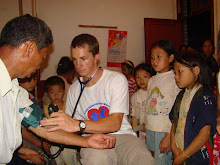
The village doctor usually provides us with the information that we need and works as our liaison between ourselves and the locals. Even though Bob speaks nearly fluent Mandarin, most of the people we see speak a local dialect that can hardly be discerned by Dr. Detrano. Thus, the village doctor usually becomes our translator (most speak Mandarin as well). We take the subjects blood pressure, measure their height and weight, and run through a series of questions such as, do you smoke? drink? how often? etc. It's almost guaranteed that males will answer yes to both questions. I'm yet to meet a Chinese male who is not a habitual chain smoker. Except maybe Shao Li, who is Bob's assistant, and whom has become my good friend over the past couple weeks. If he does smoke, he hides it from Bob, knowing well that our research and education revolves around showing people the consequences of a life long addiction to cigarettes.
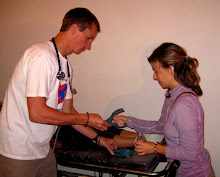
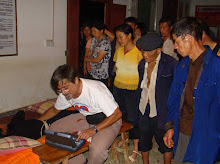
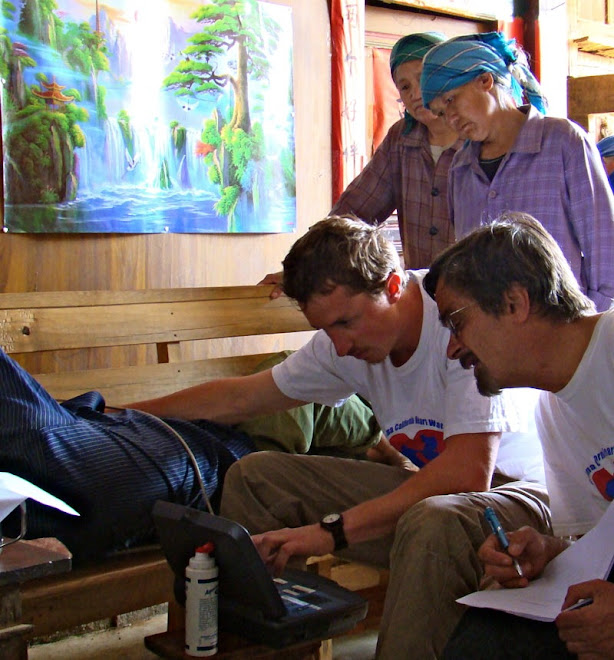
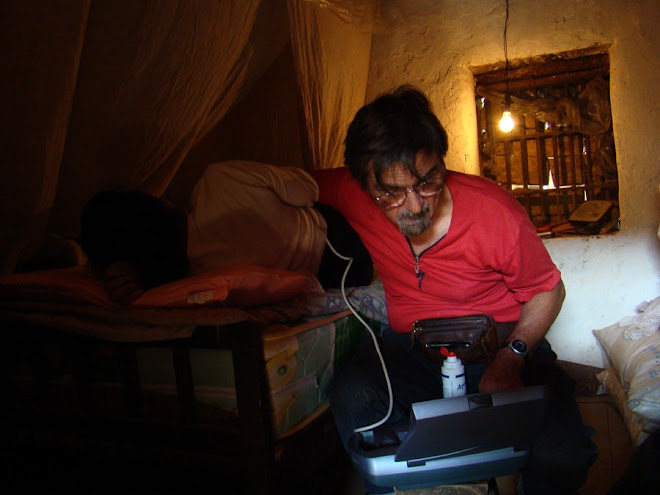
After obtaining this general but essential information, we then perform a cardiac sonogram. Much like looking at the sonogram of a pregnant woman, the cardiac sonogram gives us a black, white, and gray image of a planar slice of the heart. We usually place the transducer under the left breast next to the sternum. This window of sight is called the parasternal long axis view. For measurement purposes this view usually provides us with the best picture. However, due to size, weight, diseased lungs, and the fact the women have breasts, sometimes an alternative view must be used to acquire the desired image. We try to obtain a sliced image of the heart where the diameter of the left ventricle appears largest, the thickness of the posterior wall and septal wall appear smallest, and the left atrium and aortic root can be visualized. Bob suggested this thought experiment to me that might help you visualize what we are trying to capture with the cardiac sonogram: Take a cantalope or similar large hollow fruit with an oblong ellipsoid shape. Imagine that you want to make a transecting cut through the cantaloupe in such a way as to best measure the thickness of its walls (rind) at the place where the cantaloupe's minor axis is the longest. You can only make one transecting cut of the entire cantaloupe. How would you do it? Considering that you might not be perfectly accurate with your knife, what are the pitfalls and advantages of cutting the cantaloupe in different ways? As you might have already figured, if you incorrectly cut the cantaloupe (not in the desired location) your rind will appear thicker and the diameter of the empty center will appear smaller. Because our research involves studying the effects of hypertension, and one of those effects is Left Ventricular Hypertrophy (extra growth of the walls of the left ventricle), it is extremely important that we be accurate with our sliced image and obtain measurements that are indeed indicative of LVH and that does not falsely appear as so because of an incorrect slice with the transducer.
I realize this might all sound confusing, but take the time to try and conceptualize whats going on, it's much more simple than you think. Anyway, this is basically how our research is run. Ideally the research subjects show up, we ask them some questions, and then we take measurements of their heart (specifically the left ventricle). When we've seen enough subjects for the day Bob usually runs a free clinic and sees patients (many of whom we've used for research) and tries to treat whatever ails them. Because our resources are limited, there is only so much we can do.
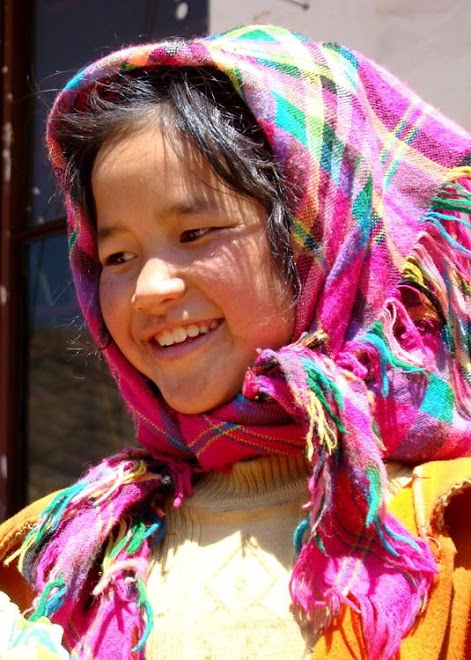
It is particularly distressing to see parents who bring in their young children. Most of them have been born with some sort of congenital heart defect. Dr. Detrano used to be able to provide grants to these otherwise fatally sick children, but due to a limited and fleeting budget, he is no longer able to provide this service. I plan on helping Bob's foundation by doing some fundraising when back in Sun Valley. If anyone is interested in making a donation you can either go the website www.chinacal.org or write a check made out to the China California Heart Watch and send it to:
The village doctor usually provides us with the information that we need and works as our liaison between ourselves and the locals. Even though Bob speaks nearly fluent Mandarin, most of the people we see speak a local dialect that can hardly be discerned by Dr. Detrano. Thus, the village doctor usually becomes our translator (most speak Mandarin as well). We take the subjects blood pressure, measure their height and weight, and run through a series of questions such as, do you smoke? drink? how often? etc. It's almost guaranteed that males will answer yes to both questions. I'm yet to meet a Chinese male who is not a habitual chain smoker. Except maybe Shao Li, who is Bob's assistant, and whom has become my good friend over the past couple weeks. If he does smoke, he hides it from Bob, knowing well that our research and education revolves around showing people the consequences of a life long addiction to cigarettes.
After obtaining this general but essential information, we then perform a cardiac sonogram. Much like looking at the sonogram of a pregnant woman, the cardiac sonogram gives us a black, white, and gray image of a planar slice of the heart. We usually place the transducer under the left breast next to the sternum. This window of sight is called the parasternal long axis view. For measurement purposes this view usually provides us with the best picture. However, due to size, weight, diseased lungs, and the fact the women have breasts, sometimes an alternative view must be used to acquire the desired image. We try to obtain a sliced image of the heart where the diameter of the left ventricle appears largest, the thickness of the posterior wall and septal wall appear smallest, and the left atrium and aortic root can be visualized. Bob suggested this thought experiment to me that might help you visualize what we are trying to capture with the cardiac sonogram: Take a cantalope or similar large hollow fruit with an oblong ellipsoid shape. Imagine that you want to make a transecting cut through the cantaloupe in such a way as to best measure the thickness of its walls (rind) at the place where the cantaloupe's minor axis is the longest. You can only make one transecting cut of the entire cantaloupe. How would you do it? Considering that you might not be perfectly accurate with your knife, what are the pitfalls and advantages of cutting the cantaloupe in different ways? As you might have already figured, if you incorrectly cut the cantaloupe (not in the desired location) your rind will appear thicker and the diameter of the empty center will appear smaller. Because our research involves studying the effects of hypertension, and one of those effects is Left Ventricular Hypertrophy (extra growth of the walls of the left ventricle), it is extremely important that we be accurate with our sliced image and obtain measurements that are indeed indicative of LVH and that does not falsely appear as so because of an incorrect slice with the transducer.
I realize this might all sound confusing, but take the time to try and conceptualize whats going on, it's much more simple than you think. Anyway, this is basically how our research is run. Ideally the research subjects show up, we ask them some questions, and then we take measurements of their heart (specifically the left ventricle). When we've seen enough subjects for the day Bob usually runs a free clinic and sees patients (many of whom we've used for research) and tries to treat whatever ails them. Because our resources are limited, there is only so much we can do.
It is particularly distressing to see parents who bring in their young children. Most of them have been born with some sort of congenital heart defect. Dr. Detrano used to be able to provide grants to these otherwise fatally sick children, but due to a limited and fleeting budget, he is no longer able to provide this service. I plan on helping Bob's foundation by doing some fundraising when back in Sun Valley. If anyone is interested in making a donation you can either go the website www.chinacal.org or write a check made out to the China California Heart Watch and send it to:
1150 Capitol Drive, Unit 119
San Pedro, California, 90732
That is all for now and I'll write again when I have the opportunity. I'm about to go bye-cycling around Kunming, (Bob has a weird way of pronouncing that word!)
Jason
Jason
Subscribe to:
Posts (Atom)